Is Your Spice Rack KILLING Your Dog? The 3 Toxic Kitchen Spices You Must Check NOW
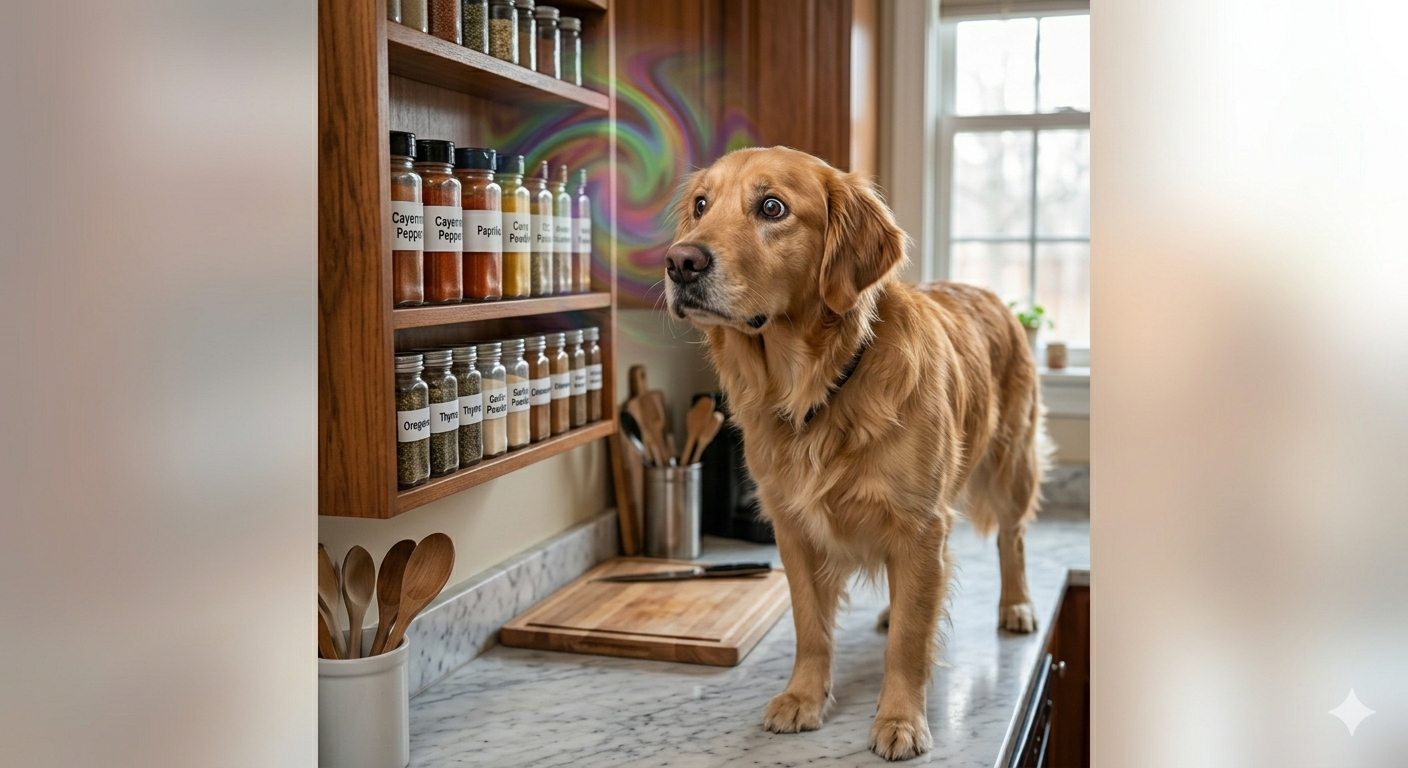
That "weird" behavior where your dog stares blankly at corners, snaps at the air, or suddenly paces around the kitchen? It might not be a cute quirk, and it certainly isn't supernatural.
New data released this week suggests that microscopic airborne particles from three specific, highly common kitchen spices are causing severe "sensory hallucinations" and nervous system distress in canines. What we consider flavorful seasoning is creating a toxic, invisible fog at dog-level.
⚠️ The 3 Toxic Spices to Check Now:
- • Paprika
- • Curry Powder
- • Cayenne Pepper
"We've been seasoning our food for years, but the residue left on our hands, counter tops, and suspended in the air is creating a deeply hostile environment for our pets,"
The Danger is in the Dust
A dog's olfactory system is tens of thousands of times more sensitive than a human's. When certain spices are crushed, poured, or heated, they release volatile oils and micro-particulates into the air. While humans barely register this, for a dog, it is akin to breathing in a cloud of irritants.
These particulates can bind to sensory receptors in the dog's nasal cavity and cross the blood-brain barrier, triggering false neurological signals—causing them to "see" or "hear" things that aren't there, leading to the infamous "ghost staring."
Is Your Dinner Making Your Pet Sick?
You need to know exactly which spices are safe and which ones are creating a toxic zone in your home.
Cross-Reference Your Spices NowFree Vet-Safe Verification Tool
What You Should Do Immediately
Owners are being urged to audit their spice racks immediately. If you notice your dog panting excessively, pacing, licking their lips constantly, or staring into space after you've been cooking, they may be reacting to an airborne trigger.
Do not assume that because a spice is natural, it is safe. Use verified tools to check the toxicity index of your kitchen staples before your pet suffers long-term neurological stress.